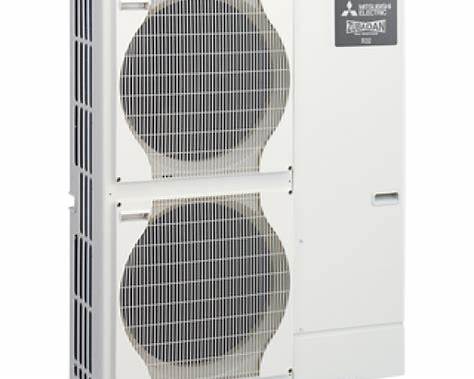
Air-source heat pumps (ASHPs) are increasingly promoted as the default low-carbon heating solution for the UK. In the right conditions, they can work very well. However, basic physics shows that they are not equally suitable for every location or every type of home.
This is not a political point — it is an engineering one.
How air-source heat pumps actually work.
An ASHP does not create heat in the way a gas or oil boiler does. Instead, it extracts low-grade thermal energy from outside air and upgrades it using electricity.
This process is efficient when the temperature difference between outside air and indoor heating demand is small. As that difference increases, efficiency falls.
Efficiency is measured by the Coefficient of Performance (COP):
COP 3.0 → 1 unit of electricity produces 3 units of heat
COP 2.0 → 1 unit produces 2 units of heat
COP below 2.0 → running costs rise sharply
This relationship is governed by thermodynamics and applies to all manufacturers.
Why climate matters.
In parts of the UK — particularly upland, rural and northern areas — winter conditions typically sit between -5 °C and +6 °C, often with high humidity and wind exposure.
In these conditions:
The available heat in outside air is very low
ASHP efficiency falls significantly
Frequent defrost cycles consume energy while providing no space heating
Peak heat demand coincides with lowest system performance
This is why many households experience slow warm-up, lukewarm heat delivery and high electricity consumption during cold spells.
Modern insulation reduces heat loss, but it does not eliminate the need for peak heat delivery.
Even a well-insulated home still requires:
responsive heating in cold weather
sufficient output during prolonged cold spells
affordable energy input during those periods
Where electricity prices are high and COP is low, running costs can exceed expectations even in relatively modern properties.
Where heat pumps work best.
ASHPs are most effective when all of the following apply:
Mild winter temperatures
Low heat loss buildings
Large heat emitters (underfloor heating or oversized radiators)
Stable, continuous operation (not rapid warm-up expectations)
Reasonable electricity pricing
In these conditions, they can be an excellent solution.
A technology, not a universal answer.
None of this means air-source heat pumps are “bad technology”.
It means they are location- and building-dependent.
A one-size-fits-all approach risks:
higher household energy costs
reduced comfort
reliance on secondary heating
Conclusion
The question is not whether air-source heat pumps work.
The question is whether they work well, affordably, and comfortably in every part of the UK.
Physics suggests the answer is: not always.
My own experience of a heat pump living in Mid-Wales over 8 years is that it costs me a lot of money circa £400 pm and we still need the log burner to keep warm.